One Acre Farm – Inspiring story of Vishwanath Bobde
I recently had the opportunity to meet with Vishwanath Bobde, a successful farmer from Bahirwadi near Beed city, and I was truly inspired by his story. Despite facing numerous challenges in his farming journey, Vishwanath Bobde’s hard work, perseverance, and innovative approach to agriculture have enabled him to turn his one acre of land into a thriving vegetable farm, bringing in a good level of financial income for his family.
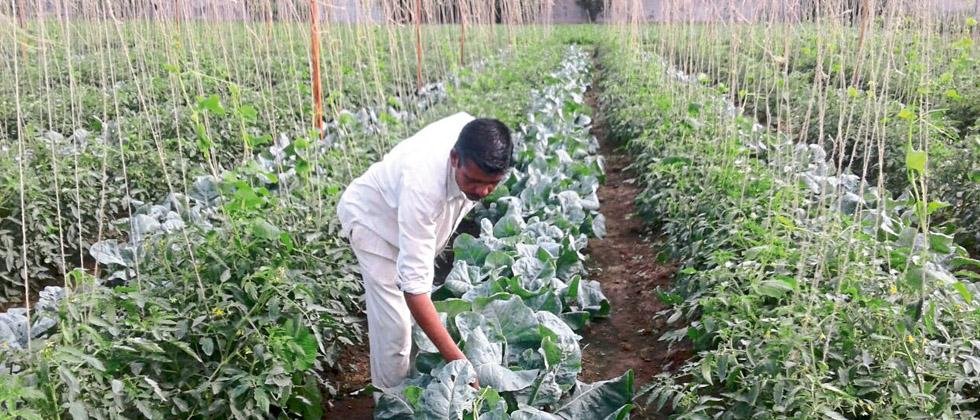
One of the most impressive aspects of Vishwanath Bobde’s farming methods is his crop planning. He skillfully cultivates six to seven crops per year in three seasons, including tomatoes, okra, kale, melon, and more. He explained to me how he plans his crop cycles and uses the “Bed (Gadivafa) method” and poly mulching to optimize yields. I was fascinated by his use of iron angles and wires to create a strong foundation for his crops, and how he carefully spaced out his beds to ensure efficient land usage.
Innovative Farming Techniques
Vishwanath has adopted techniques like raised-bed farming and mulching, both of which have been game changers for his farm. In raised-bed farming, he forms the soil into beds about three to four feet wide and raises them approximately six inches above the ground, enclosing them with sturdy frames. This not only extends the planting season and improves drainage but also prevents soil compaction, making it easier for roots to thrive. With plants spaced close together in geometric patterns and enriched with compost, these beds yield significantly more produce than traditional rows.
On these raised beds, Vishwanath primarily grows tomatoes and ridge gourd, utilizing the benefits of poly mulching. By adding a protective layer of mulch over the soil, he’s able to retain moisture, suppress weeds, and make the most of every drop of water—especially important in his region’s challenging climate. I noticed he maintains at least six feet of distance between two beds, cleverly using the space to grow additional crops like okra or cauliflower, ensuring nothing goes to waste.
This thoughtful approach to land management and resource optimization has clearly contributed to his farm’s productivity and sustainability.
Vishwanath Bobde also shared with me his irrigation plan, which relies on the Bindusara river that flows through his city. He set up a pipeline to bring water to his farm and uses a drip system to ensure consistent water supply even during droughts. I was impressed by his dedication to sustainable water usage and how he has managed to grow a variety of crops all year round, bringing in a regular income for his family.
What I found particularly remarkable was how Vishwanath reinvested his initial profits into building a well near the Bindusara river. This strategic move allowed him to establish a continuous water source, which he then connected to his farm through a carefully laid pipeline. With this infrastructure in place, Vishwanath irrigates his crops using both sprinklers and drip systems, maintaining optimal soil moisture even in the peak of summer. His commitment to water management not only safeguards his crops against unpredictable weather but also highlights his forward-thinking approach to sustainable farming.
What really stood out to me was how Vishwanath Bobde and his wife are able to manage their farm with just two laborers. They use drip fertilizers, HTP pumps, and spray guns to reduce expenses and maximize profits. The entire process of watering, as well as spreading organic fertilizers and pesticides, is handled with sprinklers, making their farm highly efficient. By relying on such innovative methods—and by working tirelessly themselves—Vishwanath and his wife keep production costs low while ensuring the crops get the care they need. This dedication not only improves profitability but also allows them to deliver consistently fresh, high-quality produce to their customers. Vishwanath Bobde’s proximity to the market also gives him an advantage, as he can deliver fresh produce quickly, ensuring that his customers always have access to fresh vegetables.
The Importance of Market Awareness in Small-Scale Farming
After spending time with Vishwanath Bobde, it became clear that one of the key reasons for his sustained success is his sharp market awareness. For small-scale farmers, understanding the local market trends and customer demands isn’t just an advantage—it’s a necessity for maximizing profits.
By carefully observing fluctuations in vegetable prices and adjusting his crop cycles accordingly, Vishwanath consistently ensures his produce is in high demand. For example, planting okra when demand peaks, or choosing a mix of vegetables that gives him staggered harvests throughout the year, allows him to fetch better prices at the right time.
Keeping a close eye on market needs also helps small farmers avoid oversaturation—if everyone grows tomatoes, prices drop. Farmers like Vishwanath use their awareness to diversify, growing less common crops or even flowers, which helps keep their income streams steady despite market volatility.
In essence, market awareness empowers small-scale farmers to:
- Time their planting and harvesting for the most lucrative periods
- Choose crops based on expected demand, not just tradition
- Adjust quickly to shifts in consumer preferences
- Minimize waste and maximize returns with smarter planning
With a bit of vigilance and flexibility, even a single acre can become the source of a reliable and growing income.


One acre of Vishwanath Bobde’s tomato crops can yield up to one thousand crates, and his total annual income from all his crops ranges from five to six lakh rupees. His success with karli and dodka crops in the winter months, with okra selling for Rs. 50 per kg and dodka fetching Rs. 30-70 per kg, is a testament to his innovative farming methods.
How Vishwanath Bobde Earned ₹7 Lakh from Just One Acre
When I asked Vishwanath Bobde how he managed such impressive earnings from a single acre of land in Maharashtra’s drought-prone Beed district, he smiled and leaned in to share his strategies—each one a testament to resourcefulness and relentlessly smart farming.
Embracing Multi-Cropping and Creative Land Use
Vishwanath realized early on that he couldn’t depend on just two crops a year if he wanted substantial returns. Instead, he adopted a multi-cropping model, carefully planning his crop selection so that his small field teemed with variety throughout the year. Using sturdy wire fencing, he made the most of his space by training creepers like ridge gourd and bitter gourd upward—freeing up ground for tomatoes, okra, melons, cauliflower, cabbage, and more.
This system allowed him to harvest up to six or seven crops in different rotations within the span of a year—each crop selected for its season and market demand. The result? No patch of earth on his farm sits idle, and Vishwanath has a fresh supply of produce to sell nearly every month.
Building a Reliable Water Supply
Water scarcity is a constant challenge in Beed, but Vishwanath turned this obstacle into an opportunity. With the profits from his first year’s harvest, he invested in digging a well near the Bindusara river and set up a pipeline to bring water directly to his field. This precious resource is delivered through a drip system and sprinklers, ensuring consistent irrigation—even in the baking summer months—while keeping usage efficient and sustainable.
Innovative Cultivation Techniques
Vishwanath is not afraid to try new methods. He uses raised beds framed with iron angles and wires, spacing them a generous six feet apart. This design not only prevents soil compaction but also boosts yields and simplifies weeding. Poly mulching is applied across his beds to retain moisture and minimize weeds, making each drop of water count.
Efficiency and Smart Labor Management
Perhaps what impressed me most is how Vishwanath, alongside his wife and just two laborers, is able to manage the entire operation. By relying on technology like HTP pumps and spray guns for fertilizer and pesticide application, and drip irrigation to precisely water his crops, he keeps operational costs remarkably low. This hands-on, lean approach maximizes profits and minimizes waste.
Market Proximity and Year-Round Income
Living close to the market gives Vishwanath a fresh advantage—literally. His vegetables reach customers while still brimming with flavor and nutrition, and he leverages seasonal price swings to his benefit. In peak months, tomatoes alone have earned him lakhs of rupees, while melons and gourds command premium prices during the winter.
Continuous Experimentation
Vishwanath isn’t one to rest on his laurels. If a particular crop underperforms, he tweaks his approach or tries something new the following year. His drive to innovate molds setbacks into stepping stones.
I was also fascinated by his unconventional approach to farming, where he grows flowers in the middle of his crops, bringing in an additional income of Rs. 55,000 this year alone. His dedication to experimenting with new methods and using the resources available to him is truly inspiring.
In a district known for its agricultural challenges, Vishwanath Bobde’s success is a shining example of what can be achieved with hard work, perseverance, and an experimental attitude. Meeting him has given me a new appreciation for the power of agriculture and how it can transform lives.
I was also fascinated by his unconventional approach to farming, where he grows flowers in the middle of his crops, bringing in an additional income of Rs. 55,000 this year alone. His dedication to experimenting with new methods and using the resources available to him is truly inspiring.
The Promise of Organic Farming: Profitability and Sustainability
During our conversation, Vishwanath Bobde shared his plans to transition his entire farm to organic cultivation—a move he believes will reap both financial and environmental rewards. By shifting to organic methods, Vishwanath expects to significantly reduce production costs, as natural fertilizers and pest management techniques often rely on easily available farm resources rather than expensive chemical inputs.
On the profitability front, going fully organic can open up new markets and potentially fetch premium prices for crops. Consumers are increasingly seeking out organic produce for its health benefits and environmental credentials, and farmers like Vishwanath can meet this demand directly. He’s optimistic that in the coming years, cutting input costs and tapping into the organic market will not only maintain but actually boost his profit margins.
From a sustainability perspective, organic farming promotes soil health, preserves water resources, and limits harmful residues in the environment. For small-scale farmers, this means greater long-term resilience—healthier soil can support crops for years on end without the need for heavy external inputs. Vishwanath wants to set an example for other farmers, showing that attentive market research and resource optimization, paired with sustainable practices, can make farming both profitable and a force for good.
In a district known for its agricultural challenges, Vishwanath Bobde’s success is a shining example of what can be achieved with hard work, perseverance, and an experimental attitude. Meeting him has given me a new appreciation for the power of agriculture and how it can transform lives. His story is a reminder that with dedication and innovation, anything is possible.
A Ripple Effect: Inspiring Change Among Local Farmers
What’s truly remarkable is how Vishwanath Bobde’s determination and innovative techniques haven’t just benefited his own family—they’ve caught the attention of fellow farmers in the region. After witnessing his results firsthand, many local farmers began visiting his farm to learn about crop planning, drip irrigation, and resourceful use of small plots.
Vishwanath’s willingness to share his experiences and provide practical guidance has encouraged others to adopt efficient practices like poly mulching, integrated crop cycles, and drip fertilizer application. As a result, several neighboring farmers are now seeing higher yields and more consistent incomes, proving that one person’s success can truly uplift an entire community.
Vishwanath’s Advice for Fellow Farmers
When I asked Vishwanath what he would say to other farmers navigating tough times, he shared a message brimming with optimism and practical wisdom. He emphasized the importance of closely monitoring market trends and making full use of available resources—whether it’s soil health, water management, or experimenting with new crops and techniques.
Vishwanath also spoke about the value of adaptability. After seeing notable results from each seasonal investment, he now plans to transition to fully organic farming next year, confident that this will further reduce his costs and boost his profits. “Success is possible for anyone willing to observe, learn, and innovate,” he told me, encouraging farmers to stay hopeful and resourceful, no matter the obstacles.
His story, grounded in practical action and relentless optimism, serves as an inspiring reminder: even in the face of adversity, perseverance and a willingness to adapt keep possibilities wide open.
| Aspects of Vishwanath Bobde’s Farming | Details |
|---|---|
| Location | Bahirwadi near Beed city |
| Total Land Owned | 5.5 acres |
| Remaining Land After Construction of Market Committee | 1 acre |
| Water Source | Bindusara river |
| Water System | Pipeline for irrigation with drip system |
| Number of Crops | 6-7 crops in 3 seasons per year |
| Major Crops | Tomato, Dodka, Karli, Okra, Kale, Melon, Kalingad |
| Income per Year | 5-6 lakh rupees from all crops |
| Income per Acre | Up to 1,000 crates of tomatoes and 30 ton’s of Kalingad. To put this into perspective, on just a single acre, Vishwanath Bobde is able to harvest nearly 1,000 crates of tomatoes and an impressive 30 tonnes of watermelons (Kalingad) during the peak season. His strategic crop selection means that even winter harvests, such as gourds (dodka and karli), fetch excellent market rates—demonstrating not just productivity, but a keen understanding of seasonal demand and market trends. |
| Market Distance | 2-3 kilometers away |
| Farming Techniques | Bed (gadivafa) method, poly mulching, drip fertilization |
| Contact Information | Vishwanath Bobde – 9763372857 |
In conclusion, the success story of Vishwanath Bobde’s one-acre farm in Beed city is a shining example of rural entrepreneurship and agricultural innovation. Through his strategic bed spacing, sustainable water usage, and careful irrigation planning, Bobde has managed to achieve a high level of success from a small piece of land. His dedication to experimenting with new crops and finding the right market has paid off, resulting in a consistent income throughout the year. himself. Bobde’s story proves that with hard work, determination, and a little bit of innovation, even a small piece of land can yield great rewards.
We hope this blog is vital for you; hence more information regarding any agriculture sector, stay tuned with Krushimantri.com
And more information regarding any travel, stay turned with urbanchats.com