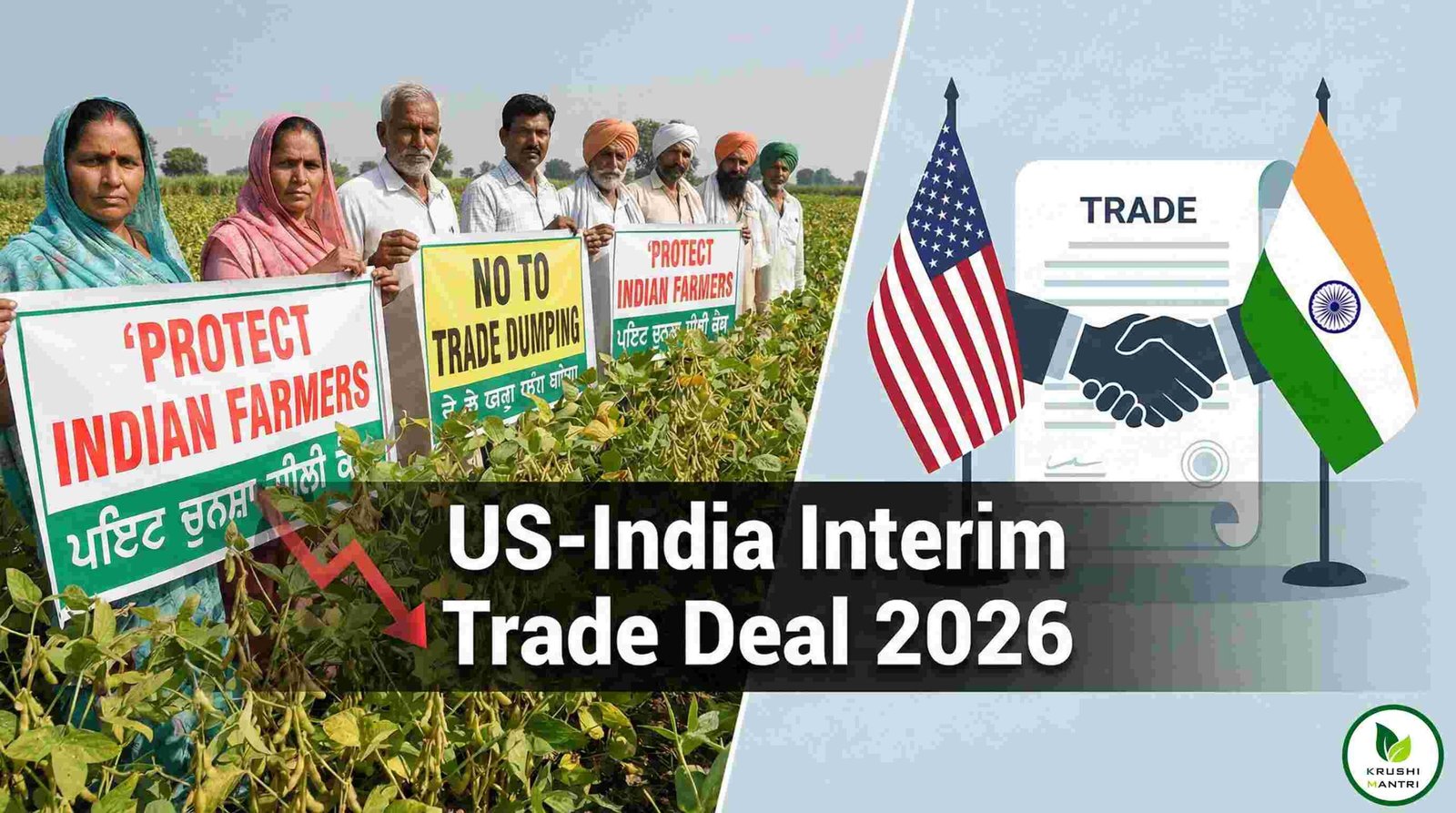
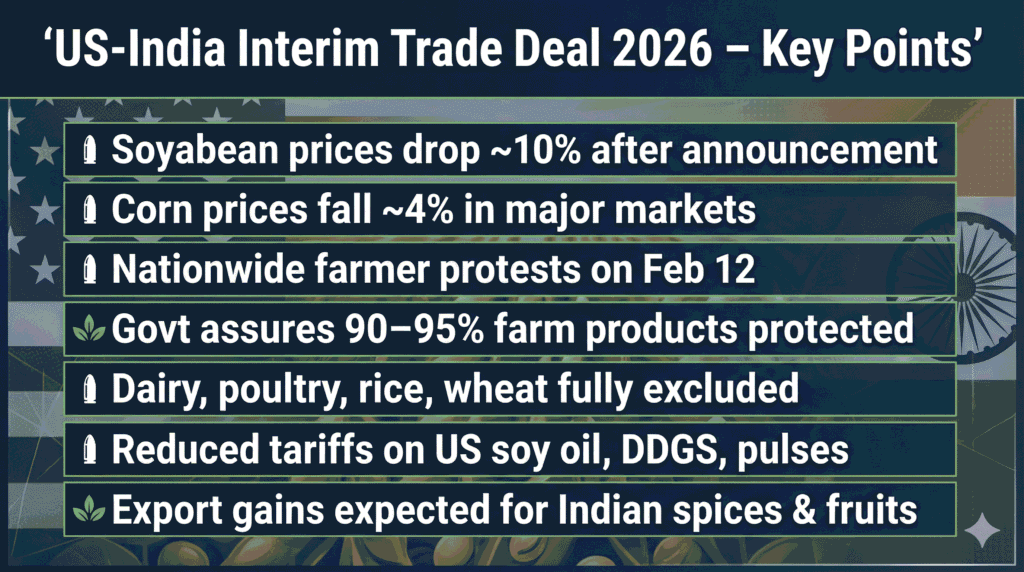
The India-US Trade Deal, announced on February 6–7, 2026, has triggered sharp reactions across India’s agriculture sector. Domestic soyabean prices have fallen by about 10% and corn by 4% since the announcement, amid fears of cheaper US imports. Farmer unions staged nationwide protests and strikes on February 12, while opposition leaders criticized the pact. The government maintains strong safeguards are in place.
Overview of the India-US Trade Deal
The framework reduces tariffs and eases non-tariff barriers for select US goods entering India, in exchange for better market access for Indian exports. It serves as a step toward a full bilateral agreement.
Key Provisions Affecting Agriculture
- India’s Commitments: Elimination or reduction of tariffs on US products including:
- Dried Distillers Grains with Solubles (DDGS) and red sorghum (used as animal feed).
- Soybean oil (including GM varieties).
- Tree nuts (almonds, walnuts), fresh/processed fruits (apples, cherries), wine, spirits, and certain pulses.
- US Commitments: Lower tariffs (from ~50% to 18%, zero on some) on Indian goods, benefiting exports like spices, tea, and select fruits.
- Safeguards: Sensitive sectors such as dairy, poultry, rice, wheat, sugar, cotton, millets, and most vegetables/fruits remain protected. Changes for some items are phased over up to 10 years.
Market Impact: Price Drops Reported
Soyabean prices dropped sharply post-announcement:
- In Maharashtra’s Latur market: Down to ₹5,100/quintal (from higher pre-deal levels; MSP is ₹5,300/quintal).
- Some Nagpur areas: As low as ₹4,200/quintal in isolated cases.
- Corn prices fell 4%. These declines occurred even before full implementation, driven by market anticipation of increased US supply.
Protests and Farmer Concerns
- Nationwide strike on February 12: Called by Samyukt Kisan Morcha (SKM) and unions, with demonstrations including symbolic burning of deal documents.
- Key worries: Subsidized US imports could depress domestic prices for soyabean, maize, jowar, and feed markets; potential long-term threats to small/marginal farmers (86% of India’s farming community); risks to food sovereignty and MSP systems.
Political Reactions
- Opposition (Rahul Gandhi): On February 15, described the deal as a “betrayal,” raising questions on GM soy oil imports’ impact on soyabean farmers (especially in Madhya Pradesh, Maharashtra, Rajasthan), potential dairy dependence on US agriculture, and MSP weakening.
- Government Response: Commerce Minister Piyush Goyal and Agriculture Minister Shivraj Singh Chouhan issued statements assuring 90–95% of farm products are protected. They accused critics of spreading misinformation and emphasized export benefits for Indian farmers.
FAQ: Key Questions on the Deal
Q1: What triggered the recent soyabean and corn price falls?
A: Market fears of duty-free US imports (soy oil, DDGS) led to a 10% soyabean drop and 4% corn decline since early February.
Q2: Are dairy, poultry, rice, and wheat affected?
A: No – these are fully excluded from concessions, per government statements.
Q3: Will GM soy imports change India’s cultivation policies?
A: The deal allows GM soy oil imports but does not alter India’s ban on GM crop cultivation.
Q4: What benefits are expected for Indian farmers?
A: Potential export gains (zero tariffs on spices, tea, fruits) and lower feed costs (DDGS/sorghum) for livestock/poultry.
Q5: Why the February 12 protests?
A: Unions fear subsidized US “dumping” will hurt domestic prices, rural incomes, and livelihoods.
Q6: What’s next?
A: The interim pact is non-binding on some aspects; full negotiations continue. Farmers should monitor mandi prices via eNAM/APMC apps.
This deal highlights the tension between global trade gains and domestic farm protection. Stay tuned for updates on implementation and market trends.
Kisan Alert: Get Weekly Agri News, Price Updates & Scheme Alerts! Subscribe to Krushimantri’s free newsletter now – real-time info to safeguard your farm income. Join thousands of farmers today!